


Switching to Solar & Heat Pumps During the Energy Crisis?
How Much Could You Save Switching to Solar & Heat Pumps During the Energy Crisis?
The ongoing energy crisis has transformed the way homeowners think about heating, electricity, and long-term costs. With gas and electricity prices fluctuating sharply due to global instability, many households are no longer asking if they should upgrade their energy systems—but when.
One of the most effective ways to regain control is by switching to solar and heat pumps. But the key question remains:
How much could you actually save?
In this guide, we break down real-world savings, long-term benefits, and why acting now could make a significant financial difference.
Understanding the Energy Crisis and Its Impact
The current energy crisis is not just a temporary spike—it reflects deeper issues in global energy supply. Reliance on fossil fuels means that geopolitical tensions, supply chain disruptions, and market speculation can all send prices soaring overnight.
For UK homeowners, this has resulted in:
- Higher monthly energy bills
- Unpredictable price increases
- Increased reliance on imported gas
This volatility has exposed a key weakness: lack of control.
And that’s exactly where switching to solar and heat pumps changes the equation.
Why Switching to Solar Is Gaining Momentum
Solar energy has rapidly become one of the most attractive solutions during the energy crisis—and for good reason.
1. You Generate Your Own Electricity
By installing solar panels, you produce your own power instead of relying entirely on the grid. A typical residential solar system can generate enough electricity to cover most or all of a household’s daily energy needs, depending on roof size and sunlight exposure. Any excess power generated during the day can be stored in a home battery system or fed back into the grid through net metering programs, potentially earning you credits on your electricity bill. This level of energy independence means fewer disruptions during outages and greater control over how and when you use power.
2. Protection Against Rising Prices
Energy companies can raise tariffs—but sunlight remains free. Electricity prices have historically increased year over year, and in many regions, rates have surged dramatically in recent years due to fuel shortages, infrastructure costs, and inflation. Once your solar system is installed, your cost of generating power stays essentially fixed. This shields you from unpredictable utility rate hikes and gives you a stable, predictable energy expense month after month, regardless of what’s happening in global energy markets.
3. Long-Term Financial Stability
Solar allows you to lock in energy costs for decades, rather than being exposed to market volatility. Most solar panels come with performance warranties of 25 to 30 years, and many systems continue producing power well beyond that. When you factor in reduced or eliminated electricity bills, available government incentives, and tax credits, the return on investment can be significant. Studies show that homes with solar installations also tend to have higher property values, making it not just an energy decision, but a smart financial one for the long term.
Real Savings from Switching to Solar
Let’s look at realistic numbers for a typical UK household.
Average Energy Bill Without Solar
- £1,800–£2,500 per year (and rising during the energy crisis)
With Solar Installed
- Savings of 50–70% on electricity bills
- Annual savings: £900–£1,700
Over 25 Years
- Total savings: £25,000–£40,000+
And that’s without factoring in future price increases—which could push savings even higher.
Adding Battery Storage: Even Bigger Savings
Solar panels alone are powerful—but adding a battery system takes things further.
Without Battery:
- Use solar power during the day
- Still rely on grid at night
With Battery:
- Store excess energy
- Use it in the evening
- Reduce grid dependency significantly
This can increase savings to 70–90% of your electricity costs

Heat Pumps: The Other Half of the Equation
While solar tackles electricity, heating remains one of the biggest expenses—especially during the energy crisis.
That’s where heat pumps come in.
How Heat Pumps Reduce Your Energy Bills
Heat pumps don’t generate heat like gas boilers—they transfer heat, making them far more efficient.
Efficiency Comparison:
- Gas boiler: ~90% efficient
- Heat pump: 300–400% efficient
This means:
For every 1kW of electricity used, a heat pump produces up to 4kW of heat

Cost Comparison: Gas vs Heat Pump
Gas Heating (Typical Home)
- Annual cost: £1,200–£2,000+
Heat Pump (with good insulation)
- Annual cost: £600–£1,200
Potential savings: £500–£1,000 per year
And again—these savings grow as gas prices rise during the energy crisis.
Combining Solar + Heat Pumps: Maximum Savings
This is where the real opportunity lies.
When you combine:
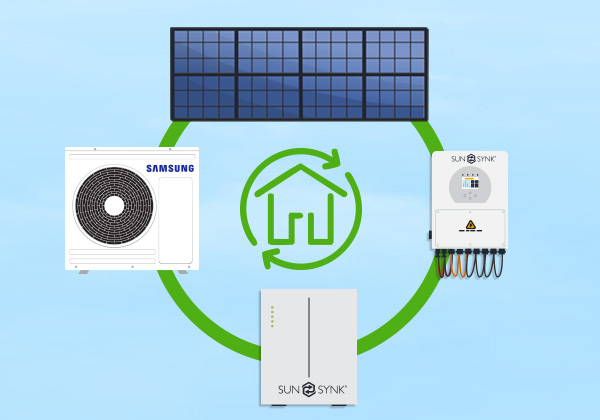
- Solar panels — generating clean, renewable electricity directly from sunlight throughout the day
- Battery storage — capturing and holding excess energy so nothing goes to waste
- Heat pump — using electricity to move heat rather than generate it, making it 3–4x more efficient than traditional heating systems
You create a highly efficient, low-cost energy ecosystem that works around the clock — not just when the sun is shining.
What Happens?
- Solar powers your heat pump — instead of drawing expensive grid electricity to heat or cool your home, your panels supply that power for free, dramatically cutting the running costs of your heat pump day after day
- Battery stores excess energy — any surplus electricity generated during peak sunlight hours is saved for later use, powering your heat pump through the evening, on cloudy days, or during overnight hours without touching the grid
- Grid usage drops dramatically — with solar generating your power and a battery covering the gaps, your dependence on utility companies shrinks to a minimum, meaning smaller bills, fewer price surprises, and a home that runs largely on its own clean energy
Total Potential Savings
Let’s combine everything:
Electricity Savings (Solar)
- £900–£1,700/year
Heating Savings (Heat Pump)
- £500–£1,000/year
Total Annual Savings:
£1,400–£2,700 per year
Over 20–25 Years:
£35,000–£60,000+
The Hidden Financial Benefits
Beyond direct savings, switching to solar and heat pumps offers additional advantages.
1. Increased Property Value
Energy-efficient homes are more attractive to buyers. Studies consistently show that properties equipped with solar panels and modern heating systems sell faster and at higher prices than comparable homes without them. As energy costs remain a top concern for homeowners, buyers are increasingly willing to pay a premium for a home that comes with lower running costs already built in — making your installation an investment that pays off even if you decide to sell.
2. Reduced Exposure to Future Price Spikes
The energy crisis has shown how quickly costs can rise. What seemed like stable energy prices just a few years ago can shift dramatically due to geopolitical events, supply chain disruptions, or policy changes — leaving households vulnerable to sudden bill increases. By generating your own power, you effectively insulate yourself from these external shocks, giving you a level of financial predictability that grid-dependent households simply don’t have.
3. Government Incentives
Grants and schemes can significantly reduce installation costs. Many governments currently offer a range of financial supports — including tax credits, rebates, low-interest green loans, and feed-in tariff programs — specifically designed to encourage homeowners to make the switch. These incentives can cover a substantial portion of your upfront costs, shortening your payback period and improving the overall return on your investment. It’s worth checking what’s available in your region, as many schemes are time-limited and subject to change.
Payback Period: How Long Until It Pays for Itself?
Solar Panels:
- Typical payback: 6–10 years
— Depends on roof size, orientation, and your region. Homes in the south of England generally see faster returns. Registering for the Smart Export Guarantee (SEG) — earning money by selling surplus electricity back to the grid — can shorten this further. With panels lasting 25–30 years, you could enjoy two decades of near-free electricity after breaking even.
Heat Pump:
- Typical payback: 7–12 years
Fastest for homes switching from oil or LPG. The Boiler Upgrade Scheme offers up to £7,500 off upfront costs, which can shave years off your payback period straight away. Savings are even greater when paired with solar panels.
Combined System:
- Payback: 8–12 years
A larger upfront investment, but significantly greater ongoing savings. Solar powers the heat pump during the day, the battery covers evenings, and grid usage drops sharply. UK grants such as the Warm Homes Plan and Boiler Upgrade Scheme can bring this window down considerably for eligible households.
After that: You’re effectively generating low-cost or free energy — the savings become yours to keep. With energy prices unlikely to fall long-term and systems lasting 25–30 years, most UK homeowners can expect 15+ years of dramatically reduced bills after breaking even.

Why the Energy Crisis Makes Now the Best Time to Switch
Timing matters.
During stable periods, switching to solar is a smart move.
But during an energy crisis, it becomes a strategic decision.
Reasons to Act Now:
- Energy prices are already high
- Future increases are likely
- Installation demand is rising
- Delaying could cost thousands in lost savings
Common Concerns About Switching to Solar
“Is it too expensive upfront?”
While installation requires investment, financing options and savings often offset costs quickly.
“Will it work in the UK climate?”
Yes. Solar panels generate electricity even on cloudy days.
“Is a heat pump suitable for my home?”
Most properties can benefit, especially with proper insulation.
A Simple Example: Real-World Scenario
Let’s say a household installs:
- Solar panel system
- Battery storage
- Air source heat pump
Before:
- Energy bills: £3,500/year
After:
- Energy bills: £800–£1,200/year
Annual savings: £2,300+
Over time, this becomes a substantial financial advantage—especially during prolonged energy instability.
Estimated Savings: Switching to Solar & Heat Pumps During the Energy Crisis
| System Setup | Annual Energy Cost (Before) | Annual Energy Cost (After) | Estimated Annual Savings | 20-Year Savings |
|---|---|---|---|---|
| Gas + Grid Electricity (Baseline) | £3,000 – £3,800 | — | — | — |
| Solar Panels Only | £3,000 – £3,800 | £1,500 – £2,200 | £900 – £1,700 | £18,000 – £34,000 |
| Solar + Battery Storage | £3,000 – £3,800 | £900 – £1,500 | £1,500 – £2,300 | £30,000 – £46,000 |
| Heat Pump Only | £3,000 – £3,800 | £2,000 – £2,800 | £500 – £1,000 | £10,000 – £20,000 |
| Solar + Heat Pump | £3,000 – £3,800 | £1,200 – £1,800 | £1,400 – £2,400 | £28,000 – £48,000 |
| Solar + Battery + Heat Pump | £3,000 – £3,800 | £600 – £1,200 | £2,000 – £3,000 | £40,000 – £60,000+ |
| Annual Energy Cost (Before) | Annual Energy Cost (After) | Estimated Annual Savings |
|---|---|---|
| System Setup: Gas + Grid Electricity (Baseline) | ||
| £3,000 – £3,800 | — | — |
| System Setup: Solar Panels Only | ||
| £3,000 – £3,800 | £1,500 – £2,200 | £900 – £1,700 |
| System Setup: Solar + Battery Storage | ||
| £3,000 – £3,800 | £900 – £1,500 | £1,500 – £2,300 |
| System Setup: Heat Pump Only | ||
| £3,000 – £3,800 | £2,000 – £2,800 | £500 – £1,000 |
| System Setup: Solar + Heat Pump | ||
| £3,000 – £3,800 | £1,200 – £1,800 | £1,400 – £2,400 |
| System Setup: Solar + Battery + Heat Pump | ||
| £3,000 – £3,800 | £600 – £1,200 | £2,000 – £3,000 |
The Bigger Picture: Energy Independence
The biggest benefit of switching to solar isn’t just savings—it’s independence.
During the energy crisis, homeowners are realising:
“If you rely entirely on external energy sources, you’re vulnerable.”
By generating your own electricity and heating your home efficiently, you:
- Reduce reliance on suppliers
- Avoid unpredictable costs
- Gain long-term control
Is Switching to Solar Right for You?
It depends on:
- Your current energy costs
- Property suitability
- Long-term goals
But for most homeowners, the combination of:
- Rising energy prices
- Available technology
- Financial savings
…makes switching to solar one of the smartest decisions available today.
Final Thoughts: Turning Crisis into Opportunity
The energy crisis has created uncertainty—but also opportunity.
Homeowners who act now by switching to solar and heat pumps are not just reducing their bills—they are future-proofing their homes.
While others remain exposed to rising costs, you could be:
- Generating your own electricity
- Cutting heating expenses
- Saving thousands every year
Ready to Start Saving?
If you’re considering switching to solar, now is the time to act.
A tailored system could help you:
- Lower your energy bills immediately
- Protect yourself from future price rises
- Increase your property value
Get in touch with us today for a free consultation and discover how much you could save.